For a Chinese FAW Toyota Corolla, engine choice also needs a body-version check. A familiar Corolla name does not establish the same wheelbase across the current published grades. Central Asian buyers should identify the complete version before using an older comfort review, comparing rear space or calculating whether the hybrid premium makes sense for their route.
Sources checked 24 October 2026. I Auto Export commercially sources vehicles. This is our buying analysis of Chinese manufacturer references and attributed original reporting, not our own road test. The current grade, older test car and offered VIN remain distinct.
Which body and powertrain does the grade table describe?
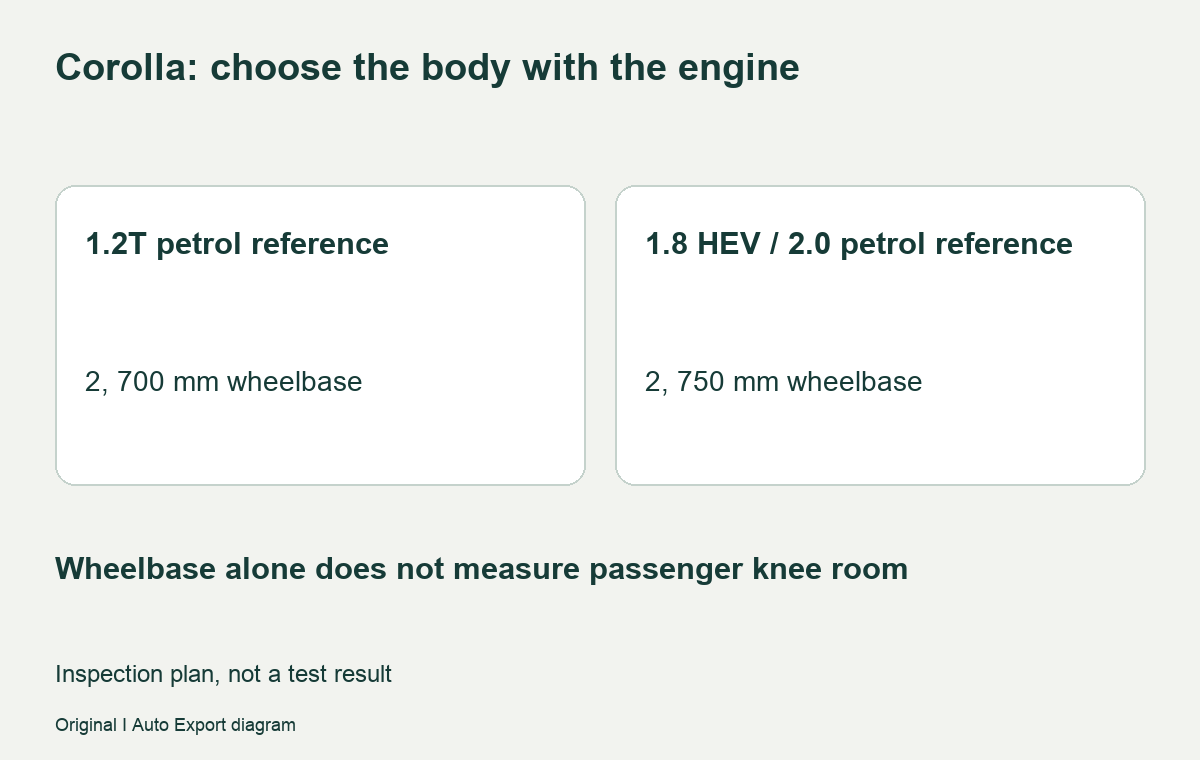
FAW Toyota’s current Chinese Corolla table lists 2, 700 mm wheelbase for the two 1.2T petrol grades, versus 2, 750 mm for the three 1.8 HEV grades and 2.0 petrol Elite. The HEVs use E-CVT and list 101 kW system output. This is a grade-specific reference; the longer wheelbase does not measure your passenger’s usable knee room.
Ask for the factory designation and build details with photographs of the actual cabin. Try the intended driver’s position before assessing the rear. Keep headroom, seat support and entry alongside knee space. Do not turn the wheelbase difference directly into an equal promise of additional legroom: the seat shape and your seating arrangement still need to be checked on the offered car.
What does an older hybrid review contribute?
Huang Keyu’s original PCauto test of 3 February 2020 concerns a 2019 1.8 Hybrid Flagship on the older 2, 700 mm wheelbase. It praised chassis refinement, noise control and smooth normal power transitions, but noted vibration during idle charging or hard acceleration and criticised the old screen experience. Those observations do not establish the current longer car’s calibration, equipment or fuel consumption.
Use those comments to plan a demonstration rather than treat the old verdict as a current specification. Include ordinary acceleration, repeated joints and the pace changes used on your route. Record tyres and passengers with the impressions. Demonstrate the actual phone and cabin controls while parked; an old screen criticism cannot diagnose a newer system or confirm that your own phone will work.
Compare the hybrid premium with your actual use
Request comparable fuel records showing route, distance, refuelling method, traffic, temperature and climate use. Keep the manufacturer cycle figure separate. If operating savings matter, calculate them from your expected annual distance and a credible difference between matched consumption records, using the local fuel price. A low number from an unrelated older test is insufficient to promise an annual saving.
Compare complete grades rather than engine labels alone. Write down required cabin functions, seating adjustments and cold-weather equipment before looking at price. Ask the supplier to identify each item in the offered configuration and demonstrate what can be shown. Missing evidence should remain a specific question in the proposal, not be filled with features seen on a higher trim.
For a used car, obtain maintenance, repairs and the relevant inspection tied to its identity. Confirm applicable warranty and service access after export. A model’s reputation does not inspect its hybrid system or establish remaining component life. Choose the body and powertrain after passenger fit, operating evidence and the condition of the actual offer are clear.
Use the model page and request an offer with destination, production preference, passengers and route. Ask for the full specification, inspection of the selected vehicle and written answers to unresolved questions before comparing complete purchase terms.