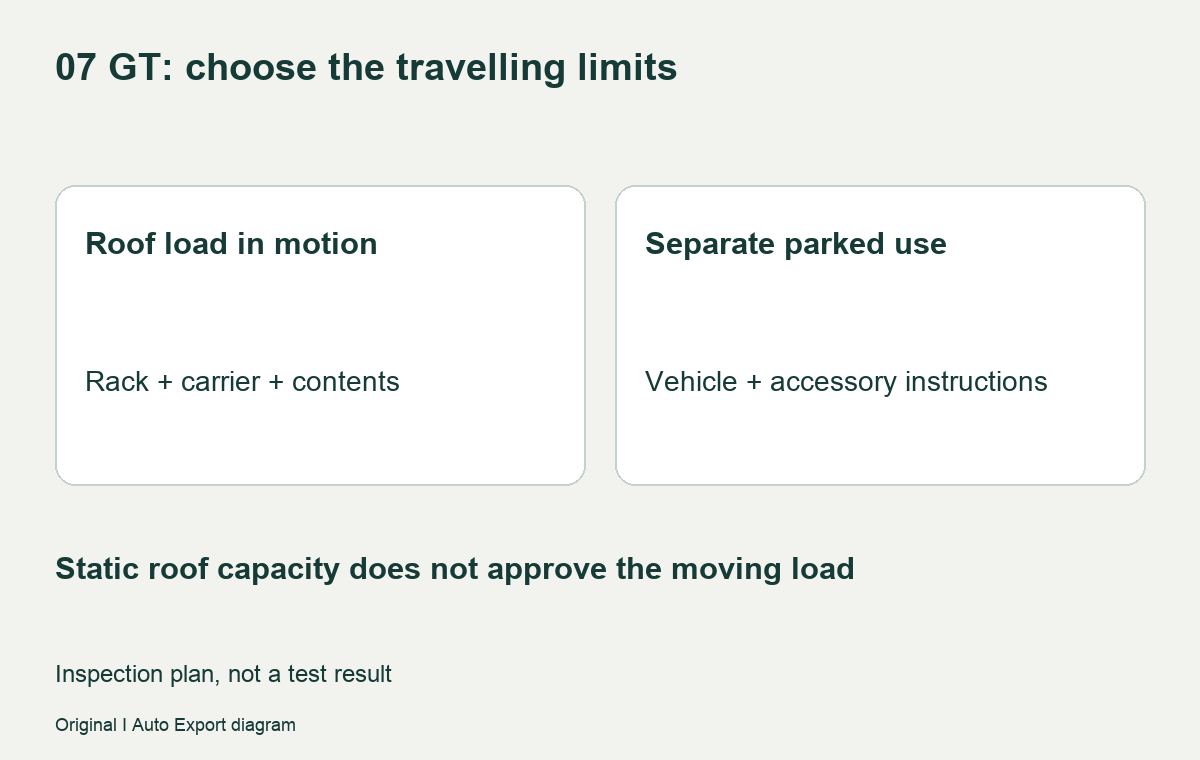
For a Lynk & Co 07 GT touring plan, moving roof load and parked roof load are different limits. Buyers considering luggage carriers, a roof tent or a trailer need the offered vehicle’s manual and applicable approvals before choosing accessories. This manufacturer-material buying analysis explains the distinctions; no independent road test of this model has been established here.
Sources checked 24 October 2026. I Auto Export commercially sources vehicles. This is our analysis of manufacturer material and attributed original reporting, not our own road test. Version, market and test conditions remain separate.
Do the performance and range claims describe one grade?
Lynk & Co’s current 07 GT page attaches 390 kW and 765 Nm to AWD Performance Ultra, while its 200 km electric and 1,422 km combined CLTC footnotes concern two-wheel-drive versions. The 1,665-litre folded-seat luggage figure also applies to two-wheel drive. Do not combine these into one vehicle specification or treat the cycle range as a winter-route result.
Ask for one complete grade sheet with the battery, drivetrain, fitted equipment and seating arrangement. Select the intended passenger arrangement before assessing luggage. If a capacity requires folding rear seats, keep the lost passenger places visible in your plan. Measure the actual items and loading opening; a headline volume cannot determine whether a particular suitcase or camping box will fit.
Which roof limit applies while travelling?
Geely’s company release of 25 July 2026 distinguishes 150 kg static roof load from 100 kg dynamic load and advertises 1.6-tonne towing. The current product page adds a 64 kg vertical-load limit. These are manufacturer references requiring the applicable vehicle/accessory instructions and destination approval. A rally-prepared car in the release is not a road-production durability test.
List the rack, carrier and carried items together when checking permitted travel load under the applicable instructions. Then separately check any parked use and the accessory’s own limits. Do not use the larger parked figure to approve a moving load. Ask the supplier to identify the exact approved mounting hardware and provide the relevant handbook pages for the offered version.
Check the complete towing arrangement
A published towing headline alone does not approve a particular trailer combination. Request the offered vehicle’s permitted masses, loading limits and coupling documentation. Identify the intended trailer and its loaded condition, then obtain the applicable local registration and use requirements. Have an appropriate specialist confirm compatibility rather than infer it from a promotional photograph of a trailer.
Keep the passenger and luggage plan alongside that check. Roof equipment, luggage and trailer attachment all belong to the same real journey, even when their limits appear on separate pages. Record which limit and document supports each proposed use. If a required approval or accessory instruction is missing, leave that use unconfirmed rather than promising it in the offer.
For energy planning, request representative journey evidence with starting and ending charge, fuel, route and conditions. The manufacturer-material evidence used here cannot settle loaded winter range, towing consumption or ride comfort. Demonstrate cabin controls and charging, confirm service access and compare the whole touring arrangement before selecting the car.
Use the model page and request an offer with destination, production preference and your operating needs. Ask for one proposal linking the exact specification, inspection of the selected vehicle and written answers to unresolved questions.