For a Lynk & Co 10 electric sedan, match battery size and charge interval before comparing advertised minutes. The 10 name also appears beside an EM-P hybrid, so a model number alone is insufficient. This analysis of current manufacturer material helps a Central Asian buyer request a precise electric-car offer; it does not claim an independently measured charging curve.
Sources checked 24 October 2026. I Auto Export commercially sources vehicles. This is our buying analysis of cited manufacturer material and, where identified, original reporting. It is not our own road test or inspection of a particular car.
Which battery does the charging claim describe?
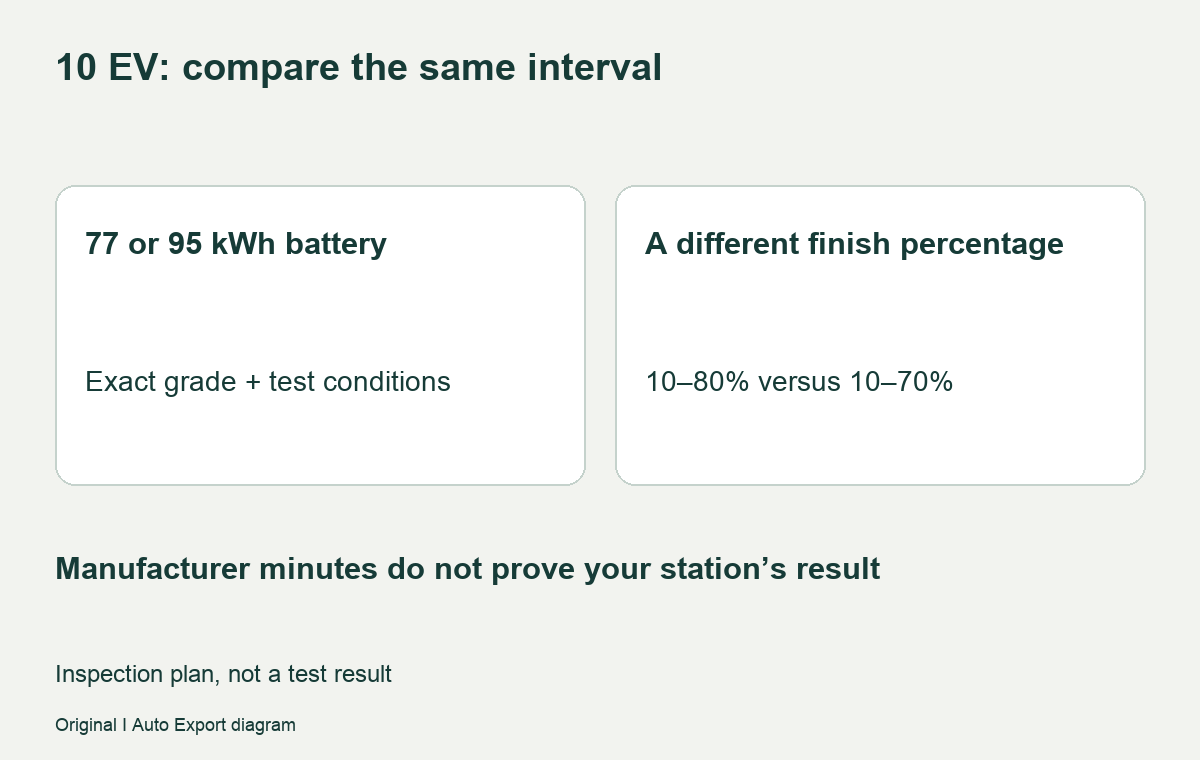
Lynk & Co’s Chinese electric 10 page advertises 77 kWh with up to 701 km CLTC and 10–80% in 10.5 minutes, versus 95 kWh with up to 816 km CLTC and 10–80% in 5.5 minutes. Its separate under-4.5-minute headline uses 10–70%. These manufacturer times are not station guarantees.
Compare like intervals first. A shorter finish percentage changes the question, even when the starting percentage matches. Ask the supplier to identify the exact battery and grade beside every quoted figure. Keep the car’s factory record and charging evidence together so a quotation for another battery does not retain the first version’s headline by accident.
Ask for a useful charging record
A charging record should identify the vehicle, station, connector, starting and ending charge, battery preparation and ambient conditions. Request elapsed time and observed power over the session, not just its highest reading. Keep any interruptions visible. The advertised best time cannot establish performance at a site with a different power limit or a battery arriving in different conditions.
Plan the routine separately from an occasional fast-charge stop. Identify where the car will stand, whether a suitable installation is available and how the driver will pay and activate a session. Have an appropriate specialist confirm compatibility and installation requirements. An impressive fast-charge number does not resolve an unavailable home space, incompatible connector or uncertain station access.
Check the offered electric car as a whole
Ask for identification confirming the battery-electric derivative rather than an EM-P quotation. Obtain the build date, installed software and fitted equipment. If the offer is an earlier Z10-named vehicle, request its own applicable specification instead of transferring today’s 10 page to it. Similar styling cannot establish the same battery, charging hardware or assistance package.
Try the actual passengers and luggage with the seats in travel positions. Check the parking approach and normal entry with the intended occupants. Demonstrate climate controls, demisting, phone connection and language while parked. Record the wheel and tyre package when evaluating ride; manufacturer charging material cannot settle cabin comfort on your regular road.
For winter route planning, request representative evidence with charge used, distance, temperature, speed, heating and load. Do not apply an invented percentage discount to CLTC and present it as measured range. Confirm vehicle condition, applicable warranty and service access after export. Choose the battery on documented usability and support, keeping untested range and charging assumptions explicit in the proposal.
Use the model page and request an offer with destination, production preference, passengers and route. Ask for a complete specification and inspection of the offered vehicle, with written answers to open questions before comparing the full purchase terms.
The official grade table specifies room-temperature Zeekr V4 megawatt charging.